Order Free Sample


Bone health isn't usually the first thing patients worry about after bariatric surgery. Most attention goes to protein, weight loss, and early recovery.
But certain procedures, especially gastric bypass and duodenal switch, can quietly reduce bone density over years when calcium and vitamin D intake fall short. By the time a fracture reveals the problem, significant bone loss may have already occurred.
Understanding how these procedures change calcium absorption, and building a consistent bone health routine early, protects one of the most fundamental parts of your long-term health. For the broader nutrition picture, see our Bariatric Nutrition Guide.
Quick Summary
- Gastric bypass and duodenal switch reduce calcium absorption by bypassing the section of intestine where it's absorbed most efficiently.
- Gastric sleeve has a smaller effect on calcium, but reduced stomach acid still matters over time.
- Vitamin D is essential for calcium absorption; without it, calcium intake alone isn't enough.
- Vitamin K2 helps direct absorbed calcium into bone tissue, not just the bloodstream.
- Calcium citrate, not calcium carbonate, is the recommended form after bariatric surgery.
- Annual labs and periodic DEXA scans catch bone loss before it becomes a fracture risk.
Who This Guide Is For
- Patients who've had gastric bypass, duodenal switch, or gastric sleeve surgery.
- Patients building or reviewing their long-term calcium and vitamin D supplement routine.
- Anyone whose labs have flagged low vitamin D, calcium, or elevated PTH post-surgery.
- Patients who haven't had a bone density scan since surgery and aren't sure if they need one.
How Bariatric Surgery Affects Calcium Absorption
The stomach's acidic environment plays an important role in converting calcium into a form the small intestine can absorb.
After gastric bypass or duodenal switch, both the reduced stomach size and the intestinal rerouting change this process significantly.
In these procedures, the section of small intestine where calcium is absorbed most efficiently is bypassed or altered.
Even with adequate calcium intake from diet and supplements, less of it reaches circulation to support bone mineralization.
Gastric sleeve doesn't involve intestinal bypass, so calcium absorption is less severely affected.
Still, reduced stomach acid and smaller meal volumes can affect calcium absorption over the long term, even after sleeve surgery.
Why This Matters for Bone Density
The body keeps blood calcium levels within a narrow range because calcium is essential for heart function, nerve signaling, and muscle contraction.
When dietary and supplemental calcium fall short, the body pulls calcium from bone to maintain that balance.
Over years, this creates a progressive drop in bone mineral density, raising the risk of osteoporosis and fractures, often with no symptoms until a fracture occurs.
Bone density in gastric bypass patients can run measurably lower than matched peers years after surgery, consistent with this long-term absorption challenge.
The Role of Vitamin D in Calcium Absorption
Vitamin D isn't just a companion to calcium. It's a prerequisite for absorbing it. Without enough vitamin D, the intestine can't effectively absorb calcium no matter how much you consume.
Vitamin D insufficiency is already common after bariatric surgery, which compounds the problem: reduced calcium absorption from surgical anatomy, plus reduced vitamin D limiting what calcium absorption remains.
Because vitamin D is fat-soluble, its absorption is affected by the same malabsorptive changes that affect other fat-soluble vitamins after surgery.
Vitamin K2 and Bone Mineralization
Vitamin K2 plays a distinct role in bone health that's less well-known than calcium and vitamin D, but still important for post-bariatric patients.
K2 activates a protein called osteocalcin, which incorporates calcium into bone tissue. Without enough K2, calcium in the bloodstream may not be effectively directed to bone.
K2 is found in fermented foods and certain animal products, foods that may be eaten in smaller quantities after surgery.
Including K2 in a post-surgical supplement routine supports the body's ability to actually use the calcium and vitamin D it absorbs.
Calcium Citrate vs. Calcium Carbonate After Bariatric Surgery
Not all calcium supplements work equally well for post-bariatric patients. Calcium carbonate, the most common form in standard supplements and antacids, requires stomach acid for absorption.
After bariatric surgery, stomach acid production is reduced, making calcium carbonate significantly less well-absorbed.
Calcium citrate doesn't require stomach acid, which makes it the recommended form for virtually all bariatric surgery patients.
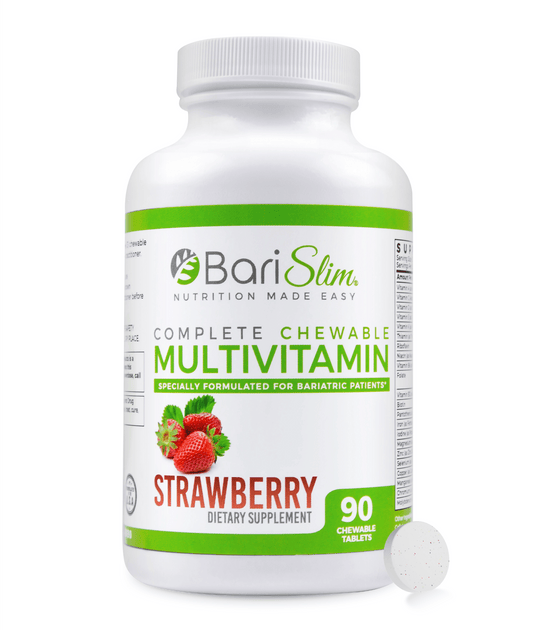
Our BariSlim Daily Essential Multivitamin includes calcium citrate as part of its formula. For additional calcium beyond a multivitamin, talk to your provider about appropriate citrate dosing for your procedure and lab values.
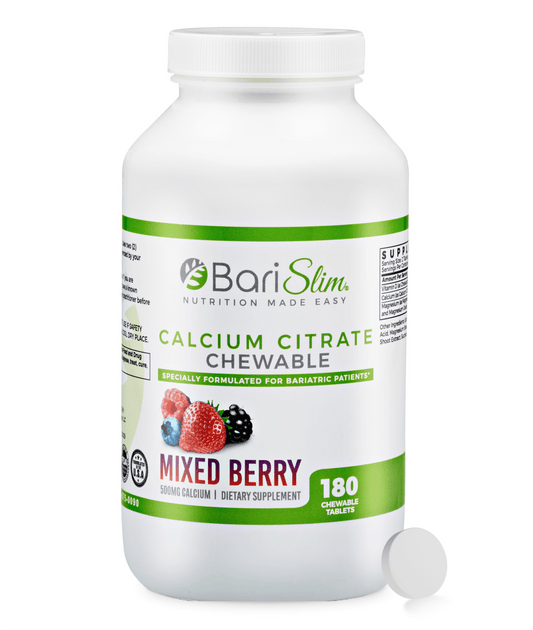
Our BariSlim Calcium Citrate Chewable delivers 500mg of calcium citrate with magnesium and vitamin D per serving, formulated specifically to meet divided-dose calcium needs after bariatric surgery.
How to Meet Calcium Needs on Smaller Meals
Meeting daily calcium needs through food alone is harder after surgery, both because portions are smaller and because dairy isn't always well-tolerated in large amounts post-surgically.
- Prioritize calcium-rich foods: Greek yogurt, cottage cheese, cheese, canned salmon or sardines with bones, and leafy greens like kale and broccoli.
- Spread calcium intake across the day: smaller, more frequent doses absorb better than one large dose.
- Take calcium separately from iron supplements, since the two compete for absorption.
- Pair calcium supplementation with vitamin D for better absorption support.
Our BariSlim Calcium Citrate Chewable is formulated for exactly this kind of divided dosing, with 180 tablets per bottle so spacing doses evenly through the day is easy to sustain.
Lab Monitoring for Bone Health Post-Surgery
Annual labs for post-bariatric patients should include vitamin D (25-OH), calcium, PTH (parathyroid hormone), and magnesium at minimum.
Elevated PTH with normal or low calcium is an early sign the body is pulling calcium from bone. Catching this early allows correction before real bone loss occurs.
A DEXA scan (bone density test) is recommended at regular intervals, typically starting one to two years post-surgery and repeated periodically after that.
If you haven't had a bone density scan since your surgery, it's worth raising with your healthcare provider.
Frequently Asked Questions
Common questions about calcium, vitamin D, and bone health after bariatric surgery.
Does gastric sleeve affect bone density as much as gastric bypass?
Sleeve has less impact on calcium absorption than bypass or duodenal switch, since the intestine isn't bypassed, but reduced stomach acid and smaller portions can still affect absorption over time, so consistent supplementation and monitoring matter for sleeve patients too.
How long after surgery does bone density loss typically start?
Measurable changes can begin within one to two years after malabsorptive procedures for some patients, and the effect may build over years, which is why consistent supplementation and periodic bone density monitoring matter even for patients who feel well long after surgery.
Can I take any calcium supplement, or does it need to be citrate?
Calcium citrate is specifically recommended for bariatric patients because it doesn't require stomach acid for absorption, while calcium carbonate is significantly less well-absorbed after most bariatric procedures. Always check the form of calcium in any supplement you use.
Is calcium supplementation enough on its own to protect bone density?
Calcium alone is necessary but not sufficient: vitamin D supports absorption, and vitamin K2 supports directing that calcium to bone tissue. Consistent supplementation covering all three, combined with weight-bearing exercise and regular monitoring, is the most complete approach.
How much calcium do bariatric patients need daily?
ASMBS-aligned guidance calls for 1,200-1,500 mg of calcium citrate daily for gastric bypass patients, and 1,800-2,400 mg for duodenal switch patients, in divided doses. Individual needs vary by procedure and lab results, so follow your bariatric program's specific recommendation.
Support Your Routine
Bone health after bariatric surgery is a lifelong consideration that deserves consistent, proactive attention.
Calcium citrate, vitamin D, and vitamin K2, combined with weight-bearing exercise and regular lab and DEXA monitoring, form the backbone of a long-term bone health strategy.
Explore our guide on vitamins after bariatric surgery and Life After Bariatric Surgery: The Complete Guide for the bigger long-term picture.
This article is for informational purposes only and should not be considered medical advice. Always consult your healthcare provider before making changes to your nutrition, exercise, supplement routine, or bariatric care plan.