Order Free Sample


GLP-1 medications like Ozempic and Wegovy are among the most powerful tools available for weight management, but they work best when paired with a nutrition strategy that accounts for what reduced appetite actually means for the body.
When food intake decreases significantly, which it reliably does during GLP-1 treatment, it becomes harder to consistently get enough protein, vitamins, minerals, and hydration from food alone. This is exactly when nutritional gaps start to show up.
A well-chosen daily supplement routine fills those gaps, supports the specific physiological demands of active weight loss, and helps patients navigate the most common GLP-1 side effects more comfortably.
This guide covers the most important supplement categories for GLP-1 medication users and how each fits into a practical daily routine. For the broader nutrition picture, see our GLP-1 Nutrition Guide.
Quick Summary
- Reduced food intake during GLP-1 treatment makes systematic supplement support more important than at normal intake levels
- A daily multivitamin provides the foundational nutritional floor
- Amino acid support can complement dietary protein to help preserve muscle mass when appetite makes food-only protein targets hard to hit
- Electrolyte support addresses the dehydration risk created by reduced thirst signals
- Digestive and motility support can complement dietary changes for nausea and constipation
- Hair, skin, and nail support provides targeted nutrition during the physiological stress of rapid weight loss
Who This Guide Is For
- Patients starting a GLP-1 medication who want to build a supplement routine from day one
- Anyone experiencing GLP-1 side effects and looking for supplement support that may help
- Patients trying to understand which supplement categories actually matter for GLP-1 treatment
- Anyone comparing individual supplements against a complete daily system
Why GLP-1 Patients Need Supplement Support
The core challenge of GLP-1 treatment is that appetite suppression dramatically reduces total food intake without reducing the body's need for essential nutrients.
Vitamins, minerals, protein, electrolytes, and fiber still need to be obtained daily, but from a significantly smaller volume of food. This makes every meal more nutritionally consequential.
Several specific factors make supplementation particularly relevant during GLP-1 treatment:
- Reduced thirst signals that can lead to dehydration and electrolyte imbalance
- Protein intake that may fall short of what's needed to preserve muscle during active weight loss
- Vitamin and mineral gaps caused by lower total food volume
- Digestive changes that affect comfort and regularity
- The physiological stress of rapid weight loss, which can affect hair, skin, and energy
Daily Multivitamin: The Foundation
A daily multivitamin is the single most important supplement for GLP-1 medication users.
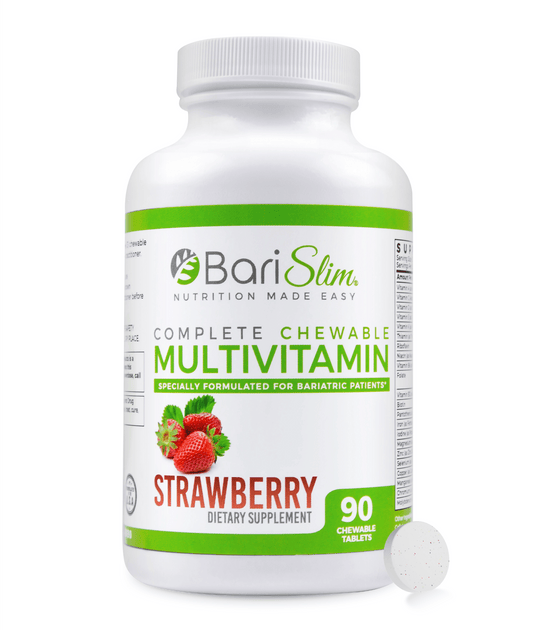
It provides broad nutritional coverage for the vitamins and minerals most likely to fall short when total food intake is reduced, including B vitamins, vitamin D, zinc, iron, and folate.
It establishes a reliable daily nutritional floor regardless of how food intake varies from day to day.
Our BariSlim Daily Essential Multivitamin is formulated as a complete daily multivitamin for individuals managing their weight, providing comprehensive micronutrient coverage in a convenient format.
Protein and Amino Acid Support: Protecting Muscle During Weight Loss
Protein is the most critical macronutrient during weight loss. Without adequate daily protein, the body loses muscle along with body fat during calorie restriction, a pattern that slows metabolism, reduces strength, and makes long-term weight maintenance more difficult.
GLP-1 patients face a particular challenge here because significantly reduced appetite makes it harder to consistently reach protein targets from food alone.
Many GLP-1 patients find it helpful to build meals around a protein source first, choosing lean meats, eggs, Greek yogurt, cottage cheese, or fish before adding other foods.
Alongside adequate protein intake, some patients also look for targeted amino acid support during active weight loss.
Our BariSlim Lean Mass Support is a BCAA and essential amino acid formula, not a protein source, providing 7g of BCAAs and essential aminos per serving to complement dietary protein during muscle-preservation efforts. It's available in Peach Mango and Chocolate flavors, both designed to be easy to consume even during lower-appetite periods.
Our Protein Intake for Weight Loss: Complete Guide covers daily protein targets in more depth.
Electrolytes: Supporting Hydration When Thirst Disappears
One of the less obvious but highly impactful consequences of GLP-1 treatment is reduced thirst signaling.
Many patients simply don't feel thirsty the way they did before starting medication, which leads to gradual under-hydration that presents as fatigue, headaches, muscle cramps, difficulty concentrating, and dizziness.
Reduced food intake also means fewer dietary sources of key electrolytes such as sodium, potassium, and magnesium. Building intentional hydration habits, independent of thirst, is essential during GLP-1 treatment.
Our BariSlim Electrolyte Balance comes in Cucumber Lime and Lemon Lime flavors and is formulated to support daily hydration and electrolyte intake during GLP-1 treatment. Mixed into water and sipped steadily through the day, it helps keep hydration on track even when thirst cues are running low.
Our Electrolytes for Weight Loss guide explains why this matters more broadly.
Digestive Support: Managing Nausea and GI Comfort
Nausea and digestive discomfort are among the most common GLP-1 side effects, particularly during dose escalation.
Dietary adjustments, such as smaller meals, easier-to-digest foods, and eating slowly, are the primary tools for managing nausea. Targeted supplement support can complement these habits for patients who experience significant ongoing discomfort.
Our BariSlim Digestive Ease is formulated to support stomach comfort and digestive calm, and is commonly included in daily supplement routines during the GLP-1 adjustment phase.
Motility Support: Addressing Constipation
Constipation is the second most common GLP-1 digestive side effect, driven by the same slowing of gastric motility that causes prolonged fullness.
Hydration and fiber intake are the most important lifestyle interventions, and targeted motility support supplements can complement these strategies for patients who experience persistent digestive sluggishness.
Fiber intake often drops for the same reason protein and hydration do: smaller meals leave less room for fiber-rich foods like vegetables, legumes, and whole grains. Prioritizing fiber-rich foods alongside steady hydration is one of the most effective ways to ease GLP-1-related constipation.
Our BariSlim Motility Restore is formulated to support healthy digestion and regularity, and is commonly included in daily supplement routines during GLP-1 treatment.
Hair, Skin, and Nail Support
Hair thinning is a commonly experienced consequence of rapid weight loss during GLP-1 treatment, driven by the physiological stress of significant calorie restriction on the hair growth cycle.
It's temporary and nutritionally connected. Adequate protein intake and consistent micronutrient coverage are the most important preventive measures.
Our BariSlim Hair Preserve provides additional nutritional support for follicle health during the active weight loss phase, including biotin and other nutrients commonly associated with hair, skin, and nail support.
How These Products Work Together
The BariSlim GLP-1 supplement line is designed as a complementary daily system rather than a collection of standalone products.
BariSlim Daily Essential Multivitamin provides the foundational nutritional floor. BariSlim Lean Mass Support provides BCAA and essential amino acid support that complements dietary protein during active weight loss. BariSlim Electrolyte Balance addresses the hydration challenge of reduced thirst signaling.
BariSlim Digestive Ease and BariSlim Motility Restore target the two most common digestive side effects. BariSlim Hair Preserve provides targeted support for follicle health during active weight loss.
Used together as a daily system, these products address the specific physiological demands of GLP-1 treatment in a way that individual products cannot do as effectively in isolation.
Daily Routine
- Morning: BariSlim Daily Essential Multivitamin with breakfast. BariSlim Electrolyte Balance mixed into your morning water.
- With meals: BariSlim Digestive Ease after meals during periods of nausea or digestive sensitivity.
- Between meals or with a meal: BariSlim Lean Mass Support to support muscle preservation, alongside a protein-focused meal or snack when appetite makes full meals difficult.
- Daily: BariSlim Motility Restore consistently, not just when constipation occurs, for best ongoing digestive support.
- Daily: BariSlim Hair Preserve as part of your morning supplement routine from the beginning of treatment.
- Throughout the day: continue sipping Electrolyte Balance or plain water to maintain steady hydration.
Frequently Asked Questions
Do I really need supplements while on GLP-1 medications?
For most GLP-1 patients, yes. Significantly reduced food intake makes it difficult to consistently obtain all essential vitamins, minerals, and protein from diet alone. A daily multivitamin and targeted supplement support provide an important nutritional safety net during active weight loss.
Can I take all of these supplements together?
Yes. The BariSlim GLP-1 supplement line is designed to be used together as a daily system. As with any supplement routine, if you have specific health conditions or take medications, discuss your supplement plan with your healthcare provider.
When should I start taking GLP-1 supplements?
Starting a consistent supplement routine at the beginning of GLP-1 treatment, rather than waiting for side effects or nutritional gaps to appear, provides the best ongoing support throughout the active weight loss phase.
Are these supplements specifically designed for GLP-1 patients?
BariSlim's GLP-1 supplement line is formulated with the specific nutritional and physiological needs of GLP-1 medication users in mind, including patients taking Ozempic, Wegovy, or other GLP-1 medications. It addresses the most common challenges of treatment, including reduced nutrient intake, digestive side effects, protein gaps, dehydration, and hair thinning during rapid weight loss.
How long should I take GLP-1 supplements?
For as long as you're on GLP-1 medications and maintaining reduced food intake, the nutritional support these supplements provide remains relevant. Many patients continue their supplement routine throughout their entire treatment period and into long-term maintenance.
Support Your Routine
GLP-1 medications are a powerful tool, and the right supplement routine makes them more effective by ensuring your body has what it needs to lose weight healthily, manage side effects comfortably, and maintain the strength, energy, and nutritional status that supports long-term success.
Building a consistent daily supplement system from the beginning of treatment is one of the most practical things you can do to support your GLP-1 journey.
See our GLP-1 Side Effects guide for the full picture of what to expect.
This article is for informational purposes only and should not be considered medical advice. Always consult your healthcare provider before making changes to your nutrition, exercise, supplement routine, or GLP-1 medication plan.