Order Free Sample


Weight regain after bariatric surgery is common, and many patients are now managing it with GLP-1 medications like Ozempic or Wegovy layered on top of their surgical history.
Combining the two creates nutritional demands that most patient-facing content doesn't address. Our GLP-1 Nutrition Guide covers the basics of eating on a GLP-1 medication, and this guide builds on that specifically for post-bariatric patients.
Understanding how GLP-1 medications behave differently in a post-surgical body, and what a dual-treatment supplement routine needs to cover, helps patients manage both interventions safely.
Quick Summary
Here's what dual-treatment patients need to know.
- Weight regain affects a meaningful share of bariatric patients within five to ten years of surgery.
- GLP-1 medications are increasingly prescribed post-surgery for regain, inadequate initial weight loss, or ongoing metabolic conditions.
- Post-bariatric anatomy can make GLP-1 side effects more pronounced, even at lower doses.
- Protein, hydration, and electrolyte needs become harder to meet when both interventions reduce food and fluid intake at once.
- A comprehensive daily supplement routine is essential, not optional, for dual-treatment patients.
- Coordinated care between your bariatric team and GLP-1 prescriber matters more in this population.
Who This Guide Is For
This guide is designed for:
- Post-bariatric patients newly prescribed a GLP-1 medication for weight regain or metabolic management.
- Patients considering GLP-1 medications after surgery and researching what to expect.
- Anyone building a supplement routine that needs to cover both surgical and medication-related demands.
- Caregivers or care teams coordinating dual-treatment patients.
Why Post-Bariatric Patients Are Prescribed GLP-1 Medications
Weight regain after bariatric surgery is more common than many patients expect. A meaningful proportion of bariatric patients regain a significant portion of their lost weight within five to ten years.
The reasons are complex: metabolic adaptation, shifting hunger hormone patterns, and behavioral factors all play a role, and no single cause explains most cases.
GLP-1 medications have emerged as one of the most effective medical tools for addressing this regain. They target appetite regulation pathways that surgery alone doesn't fully address long-term.
They're also used for patients who didn't reach their target weight loss from surgery in the first place, and for those managing metabolic conditions like type 2 diabetes alongside weight goals.
For some patients, the prescription comes from their original bariatric surgeon; for others, it comes from a separate endocrinologist or primary care provider who identifies the regain during a routine visit.
How GLP-1 Medications Work Differently in Post-Surgical Patients
The post-bariatric body is different from a non-surgical body in ways that affect how GLP-1 medications behave.
After gastric sleeve or bypass, the stomach is already smaller and gastric emptying is already altered. A GLP-1 medication further slows emptying and reduces appetite on top of that.
In practice, post-bariatric patients may feel more pronounced effects from lower doses than non-surgical patients starting the same medication.
Side effects like nausea, constipation, and reduced appetite may also be more intense at the same dose level, which is why providers often titrate more carefully and start lower.
This is also why self-adjusting your dose, or comparing your experience directly to a non-surgical patient's, isn't a reliable way to judge whether something is working correctly.
The Compounding Nutritional Challenge
Bariatric surgery already creates significant nutritional demands: altered absorption, smaller meal capacity, and lifelong supplement and monitoring requirements.
GLP-1 medications add to this by further reducing appetite and intake, raising the risk of nutritional gaps in a population that's already vulnerable.
Our guide on common nutrient deficiencies on GLP-1 medications covers which gaps show up most often on the medication side, and most of those risks compound rather than reset when layered on top of a surgical history.
Meeting nutritional needs through food alone becomes genuinely difficult when both interventions are active at once.
A comprehensive daily supplement routine isn't optional here. For most dual-treatment patients, it's essential to avoiding deficiency over time.
Protein: Even More Critical in Dual-Treatment Patients
Both bariatric surgery and GLP-1 medications reduce food intake. When both are active simultaneously, hitting daily protein targets can be nearly impossible on some days without deliberate attention.
Muscle preservation during this level of calorie restriction requires consistent daily protein intake at or above your bariatric program's target. Food-first is still the priority whenever appetite allows it, but on days when even small meals are hard to finish, amino acid support can help fill the gap.
Alongside protein-focused meals, our BariSlim Lean Mass Support is a BCAA and essential amino acid formula, not a protein source, providing 7g of BCAAs and essential aminos per serving in an easy-to-consume format, useful to complement food rather than replace it on the days appetite is too reduced to finish even small meals.
Managing Digestive Side Effects in the Post-Surgical GI Tract
Digestive changes already in place after bariatric surgery can make GLP-1 side effects like nausea, constipation, and reflux more pronounced than in non-surgical patients.
The management strategies mirror those for any GLP-1 patient: smaller meals, easier-to-digest foods, intentional hydration, and motility support. They just need to be applied more consistently in this group.
Our guide on best supplements for GLP-1 medications covers this in more depth for GLP-1 patients generally, and the same principles apply to dual-treatment patients.
Our BariSlim Digestive Ease supports general digestive comfort for nausea and stomach sensitivity, while our BariSlim Motility Restore targets regularity specifically when constipation is the more prominent issue, so which one fits depends on which symptom shows up.
Hydration and Electrolytes: A Dual-Priority Challenge
Post-bariatric patients already face hydration challenges since a small stomach makes drinking large amounts at once uncomfortable.
GLP-1 medications add reduced thirst signaling on top of that, so both the capacity and the drive to drink enough fluid are compromised at the same time.
Intentional, steady fluid intake throughout the day matters even more for this group than for either population alone.
Our BariSlim Electrolyte Balance (Cucumber Lime and Lemon Lime) is designed to be mixed into water and sipped steadily throughout the day, making consistent hydration easier to maintain even when thirst cues are suppressed and stomach capacity is limited.
Multivitamin Coverage for Dual-Treatment Patients
Because both interventions reduce food intake, dual-treatment patients are at higher risk of missing multiple nutrients at once, not just one or two.
Your bariatric multivitamin remains the foundation here. GLP-1 treatment adds to that foundation rather than replacing it, and dropping your bariatric multivitamin in favor of a GLP-1-focused one can leave real gaps in the nutrients your surgery specifically affects.
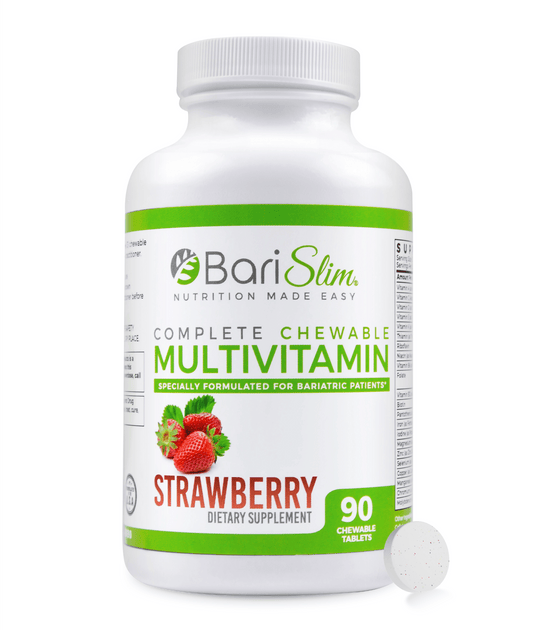
Our BariSlim Daily Essential Multivitamin is formulated to cover the broader nutritional gaps created by reduced appetite from GLP-1 treatment, layered around your existing bariatric multivitamin rather than in place of it.
If you're coming from bariatric surgery specifically, our guide on vitamins after bariatric surgery covers the surgical side of nutrient monitoring in more depth.
Working With Your Healthcare Teams
Patients using both bariatric surgery and GLP-1 medications ideally have care coordinated between their bariatric team and GLP-1 prescriber, who may not be the same provider.
Make sure both teams know every medication and supplement you're taking, and that lab monitoring covers the nutritional demands of both interventions together.
If one team isn't aware you're seeing the other, important context about your history or current labs can fall through the cracks.
Frequently Asked Questions
Common questions from patients managing both bariatric surgery and GLP-1 treatment.
Is it safe to take GLP-1 medications like Ozempic or Wegovy after bariatric surgery?
For many post-bariatric patients, yes: this combination is increasingly common. It requires individualized evaluation by a provider aware of your surgical history and current health status.
Will GLP-1 medications work as well after bariatric surgery as in non-surgical patients?
Research suggests GLP-1 medications produce meaningful weight loss in post-bariatric patients experiencing regain, though results vary by individual.
Do I need more supplements as a post-bariatric GLP-1 patient than as a surgery-only patient?
Generally yes. The added reduction in food intake from the medication makes a comprehensive routine, including a multivitamin, protein, electrolytes, and targeted support, essential for this population.
Should my lab monitoring be more frequent as a post-bariatric GLP-1 patient?
Discuss this with your provider. Many recommend more frequent monitoring for patients managing multiple interventions at once, especially during active weight loss.
Can GLP-1 medications cause dumping syndrome in post-bariatric patients?
GLP-1 medications slow gastric emptying, which is the opposite direction from dumping syndrome. Still, in post-bypass patients with altered anatomy, the interaction can produce digestive symptoms worth discussing with your provider.
Support Your Routine
Post-bariatric patients using GLP-1 medications are managing two powerful interventions at once.
A consistent daily routine covering multivitamin, protein, electrolyte, and digestive support is what makes this combination sustainable long-term.
This article is for informational purposes only and should not be considered medical advice. Always consult your healthcare provider before making changes to your nutrition, exercise, supplement routine, or GLP-1 medication plan.