Order Free Sample


It's easy to assume that eating well after bariatric surgery is enough to cover your nutritional needs.
But every major bariatric procedure changes how the body absorbs nutrients in ways diet alone can't fully compensate for. Deficiencies can build silently for months before symptoms show up.
This guide covers the essential supplement categories for post-bariatric patients, how different procedures affect absorption differently, and what a practical lifelong routine looks like. For the broader nutrition picture, see our Bariatric Nutrition Guide.
Quick Summary
- Vitamin and mineral supplementation after bariatric surgery is a lifelong requirement, not a temporary post-op phase.
- Gastric sleeve, bypass, and duodenal switch each create different absorption challenges and supplement needs.
- Calcium citrate, vitamin D3, B12, iron, and protein form the core of most post-bariatric supplement stacks.
- Bariatric-formulated supplements differ meaningfully from standard OTC vitamins in form and dose.
- Annual labs, not symptoms alone, should guide whether your routine is actually working.
Who This Guide Is For
- Patients newly post-op building their first long-term supplement routine.
- Patients years out from surgery reassessing whether their current routine still fits their needs.
- Anyone comparing supplement requirements across sleeve, bypass, and duodenal switch procedures.
- Patients whose labs have flagged a specific deficiency and want to understand why it happened.
Why Vitamin Supplementation Is Non-Negotiable After Bariatric Surgery
Bariatric procedures affect nutrient absorption through several interconnected mechanisms.
Reduced stomach size limits how much food can be eaten at one sitting, and changes in stomach acid affect nutrients like iron, calcium, and B12 that need an acidic environment to convert into absorbable forms.
In bypass and duodenal switch procedures specifically, intestinal rerouting physically bypasses sections of the gut where certain nutrients are absorbed most efficiently.
The result is that even a patient eating well after surgery is working with a fundamentally different absorption system than before. Supplementation bridges that gap.
How Different Procedures Affect Absorption
Not all bariatric procedures create the same nutritional demands. Understanding your specific procedure explains why your requirements look the way they do.
Gastric sleeve removes roughly 75-80% of the stomach while leaving the intestine intact. Absorption is less severely affected than bypass or DS, but reduced volume and smaller meals still create real management needs.
Gastric bypass creates both a restrictive and malabsorptive component by bypassing the first section of the small intestine. Iron, calcium, and vitamin D are particularly affected.
Duodenal switch creates the most significant malabsorption of any common bariatric procedure, bypassing the largest intestinal segment. Fat-soluble vitamins, protein, calcium, zinc, and iron are all substantially affected, requiring the highest doses and most frequent monitoring.
The Essential Post-Bariatric Supplement Stack
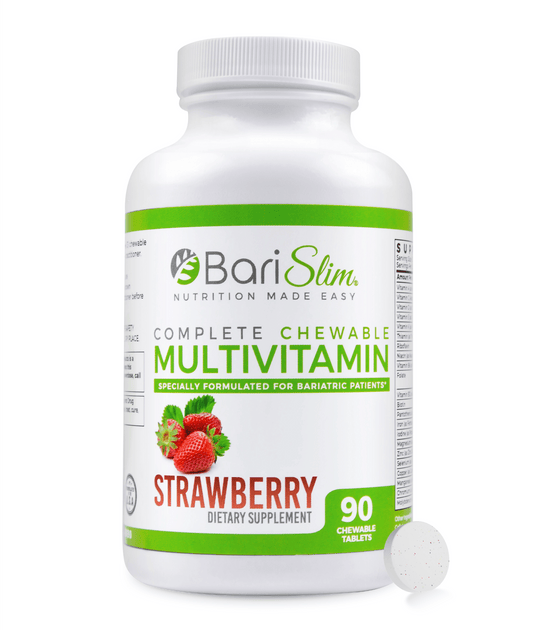
Daily multivitamin: the foundation of every post-bariatric routine, covering B vitamins, vitamin D, zinc, folate, and trace minerals in a single daily habit.
Our BariSlim Daily Essential Multivitamin is formulated to provide comprehensive micronutrient support as a daily nutritional foundation for bariatric patients.
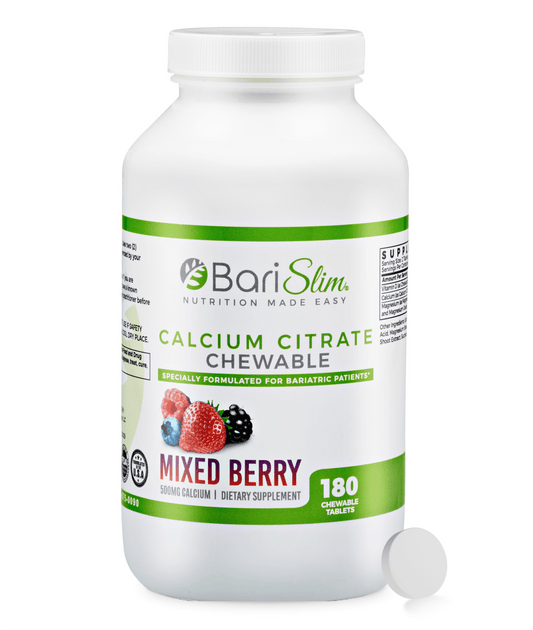
Calcium citrate: the preferred form of calcium for bariatric patients since it doesn't require stomach acid for absorption, unlike standard calcium carbonate.
Calcium should be divided across multiple doses through the day and spaced apart from iron, which competes for absorption.
Vitamin D3: essential for calcium absorption, immune function, and bone health. Deficiency is extremely common both before and after surgery.
Post-surgical requirements are typically higher than general population recommendations, and annual 25-OH vitamin D labs help guide appropriate dosing.
Vitamin B12: absorbed in a section of the digestive tract affected by bypass and DS, and dependent on intrinsic factor produced by stomach cells that are removed or bypassed during surgery.
Sublingual B12 is often recommended for these patients since it bypasses the compromised digestive pathway entirely. Undetected deficiency can cause serious neurological consequences.
Iron: particularly important for women of reproductive age and patients with a history of heavy periods.
Bypass and DS significantly reduce iron absorption, and without consistent supplementation, iron deficiency anemia can develop and worsen over time. Never take iron at the same time as calcium.
Protein: essential for muscle preservation, immune function, hair health, wound healing, and energy. Most programs recommend 60-80g daily for sleeve patients and 80-120g or more for bypass and DS patients.
On days when food protein falls short, our BariSlim Lean Mass Support, a BCAA and essential amino acid formula rather than a protein source, provides a convenient 7g of BCAAs and essential aminos per serving to complement your protein intake.
Bariatric-Formulated Vitamins vs. Standard OTC Supplements
Standard OTC vitamins are designed for people with normal digestive anatomy and absorption capacity.
Bariatric-formulated supplements use more bioavailable forms of key nutrients: calcium citrate instead of carbonate, methylcobalamin B12 instead of cyanocobalamin, chelated minerals instead of oxides.
They also provide higher doses of the nutrients most affected by surgical changes, formulated for the altered post-surgical digestive environment.
If you're currently using standard OTC supplements after surgery, it's worth reviewing your regimen with your bariatric program to confirm you're using appropriate forms and doses.
Building a Lifelong Supplement Routine
The most effective routines are simple enough to maintain for decades, not just during the high-motivation first year.
- Anchor supplements to existing habits: multivitamin with morning coffee, protein shake mid-morning, calcium with lunch and dinner.
- Use automatic subscriptions or monthly orders so you never run out.
- Keep supplements visible: a pill organizer on the counter removes the "out of sight, out of mind" problem.
- Treat lab monitoring as a non-negotiable annual checkup, not an optional follow-up.
- Reassess your routine with your provider periodically, especially after any change in labs.
Thinning hair is one of the more visible signs some patients notice during this adjustment period. A biotin supplement like our BariSlim Hair Preserve is one option some patients add, though it addresses one input among several contributing factors, not a full hair, skin, and nail formula on its own.
Frequently Asked Questions
Do I need to take vitamins forever after bariatric surgery?
Yes. The anatomical changes created by surgery are permanent, so the absorption differences don't resolve over time. Lifelong supplementation is a permanent feature of post-bariatric life.
Can I get all my nutrients from food after bariatric surgery?
No. Even patients eating excellent, varied diets can't reliably meet all nutritional needs from food alone due to the absorption changes surgery creates.
What happens if I stop taking my vitamins?
Deficiencies typically develop gradually without obvious symptoms until they become significant. Consequences can include bone density loss, anemia, neurological effects from B12 deficiency, and hair or skin changes.
Are gummy vitamins okay after bariatric surgery?
Standard gummy vitamins generally aren't recommended as a primary approach, since they typically lack iron and provide lower doses than post-surgical needs require. Discuss individual gummy supplements with your bariatric program.
How do I know if my current supplements are working?
Annual lab monitoring is the most reliable way to assess this. Symptoms like fatigue or hair changes can suggest deficiency but aren't reliable enough alone. Let labs drive supplement adjustments.
Support Your Routine
Long-term nutritional health after bariatric surgery comes down to the same decisions made consistently over years: taking your supplements, attending monitoring appointments, and prioritizing protein at every meal.
For the bigger long-term picture, see our guides on Life After Bariatric Surgery: The Complete Guide and Gastric Bypass Surgery: Recovery and Nutrition Guide.
This article is for informational purposes only and should not be considered medical advice. Always consult your healthcare provider before making changes to your nutrition, exercise, supplement routine, or bariatric care plan.